Class 58 History | The Liveries

Identity & Appearance

Class 58 Liveries

From Railfreight Red Stripe to Trainload Coal, Mainline Blue, EWS maroon and a range of export liveries, the Class 58 fleet carried some of the most distinctive freight identities of the late British Rail and privatisation eras.

The Class 58s were not only significant in engineering terms, but also visually distinctive. Their liveries chart the story of British Rail sectorisation, shadow privatisation, EWS ownership and export work in the Netherlands, France and Spain.

The sections below summarise the principal colour schemes carried by the class and highlight some of the most notable variations recorded within each group.

50 Locomotives originally built
British Rail Railfreight and sectorisation schemes
Privatisation Mainline Freight and EWS identities
Europe Dutch, French and Spanish liveries

British and European Livery History

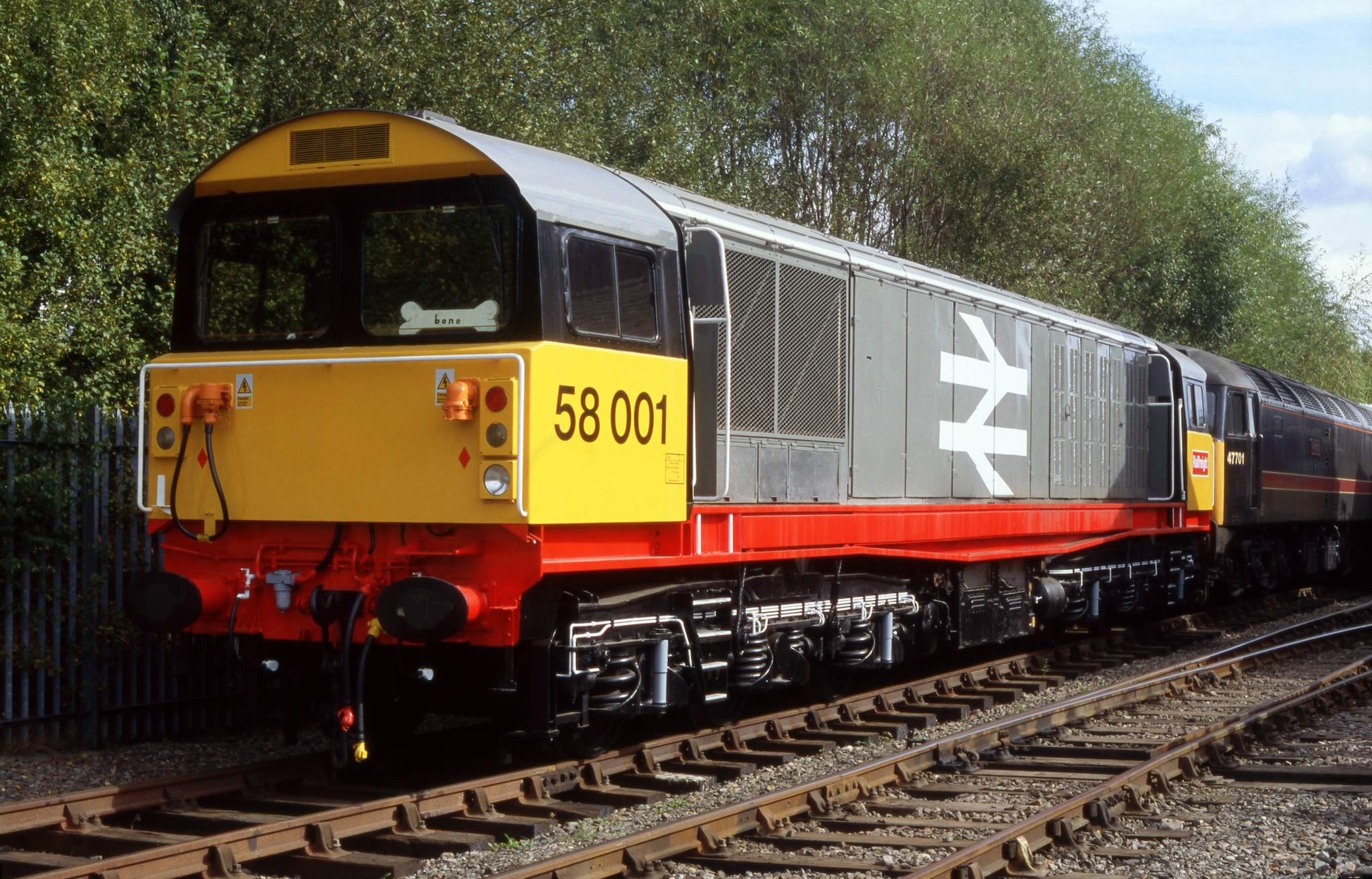
Class 58 in Railfreight Red Stripe livery

Railfreight Red Stripe

The original British Rail identity for the class

All 50 Class 58s emerged from Doncaster Works in Railfreight Red Stripe livery. It combined a grey bodyside, bright yellow cabs, a red solebar and a large white BR double-arrow on the bodyside, giving the new locomotives a distinctive appearance.

The scheme separated the Class 58 from the earlier large-logo blue era and gave the new freight locomotive a modern, business-like identity.

Railfreight Red Stripe later spread to a range of other diesel classes, including Classes 20, 26, 31, 37, 47 and 56. The red solebar was most prominent on locomotive designs where the underframe was clearly visible, while other classes generally carried red bufferbeams.

Railfreight Red Stripe became one of the defining British Rail freight liveries of the 1980s and remains closely associated with the original introduction of the Class 58.
Class 58 in Trainload Coal livery

Trainload Coal

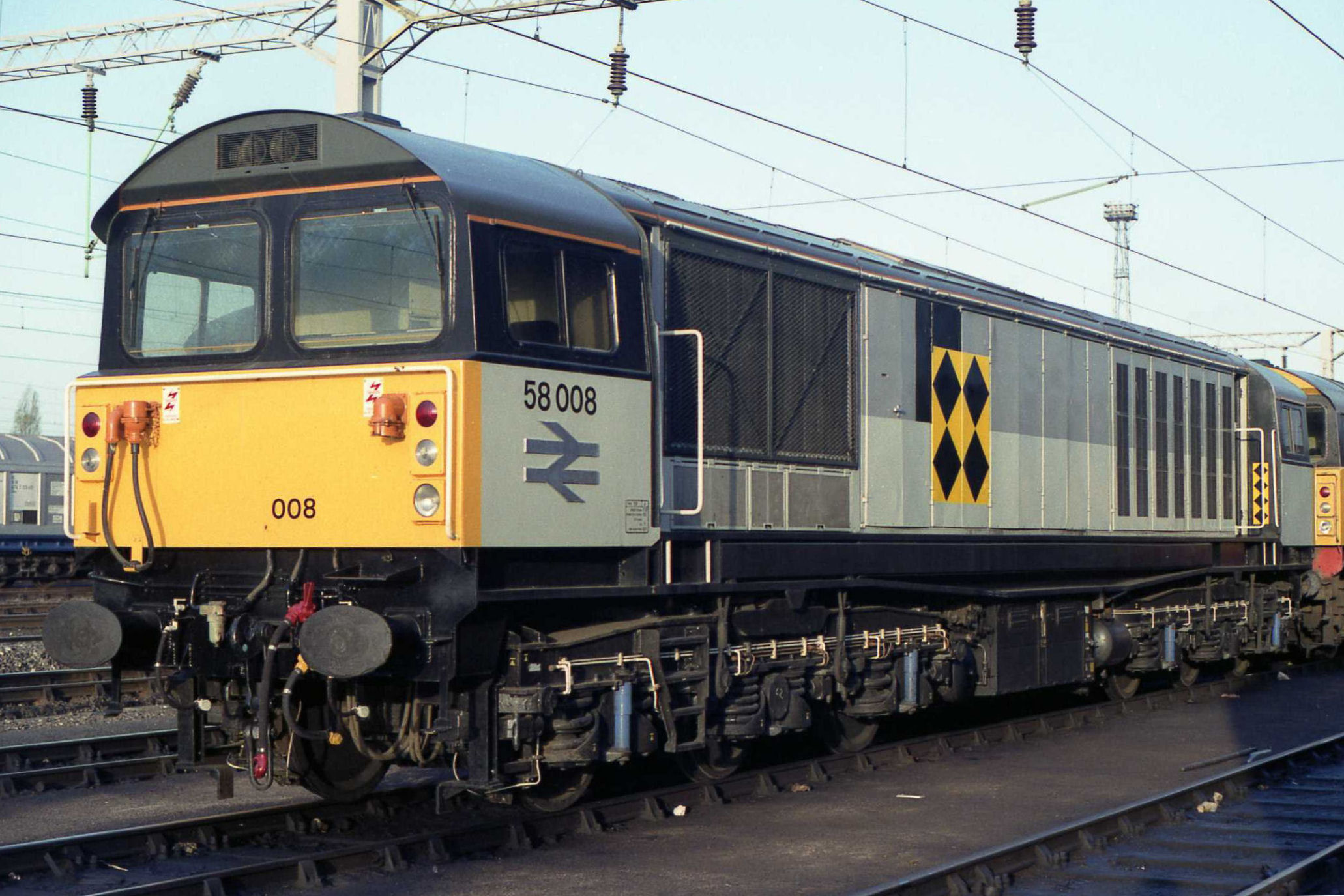
The best-known late British Rail sector scheme carried by the class

In 1987 British Rail launched the Railfreight sub-sectors, each with its own branding and visual identity. The Roundel Design Group developed the triple-grey family of liveries together with the freight-sector logos for Coal, Construction, Metals, Petroleum and Railfreight Distribution.

Although there was initially some consideration that the Class 58 fleet might be divided between Coal and Speedlink-related duties, every member of the class was ultimately allocated to the Coal sector.

This reflected the locomotive’s intended work on Merry-Go-Round coal traffic and the role that coal-sector funding had played in the original construction programme.

Sector Identity

The Coal logo used black diamonds to represent coal. The other sector identities used similarly distinctive visual motifs, including building blocks, corrugated metal and fluid movement.

Class 58 Application

One by one, the Class 58 fleet was repainted into Coal-sector livery, with 58049 becoming the final member to receive the scheme in December 1991.

Some repainting work was undertaken at Vic Berry’s yard in Leicester, an unusual detail in the class’s livery history.

Class 58 in Mainline Freight blue livery

Mainline Freight

From transitional triple-grey to the full blue and silver scheme

During the shadow-privatisation period, the entire Class 58 fleet passed to Mainline Freight. This produced a short but varied sequence of liveries, from unbranded transitional grey through to the full Mainline blue and silver corporate identity.

Triple Grey Unbranded

In this transitional form, the BR double arrows and Coal sub-sector markings were progressively removed, while depot plaques were often retained.

Most locomotives are believed to have passed through this condition, although its temporary nature makes precise identification difficult.

Known examples: 58004, 58011, 58021, 58035, 58036 and 58049.

Mainline Triple Grey

This retained the triple-grey base but added the blue-and-yellow Mainline rolling-wheels logo across the engine-room doors.

Most Class 58s carried this version, although 58050 is believed to have moved directly to the full blue and silver scheme.

Known variation: 58035 briefly carried full Mainline branding while retaining a cast BR double-arrow plate.

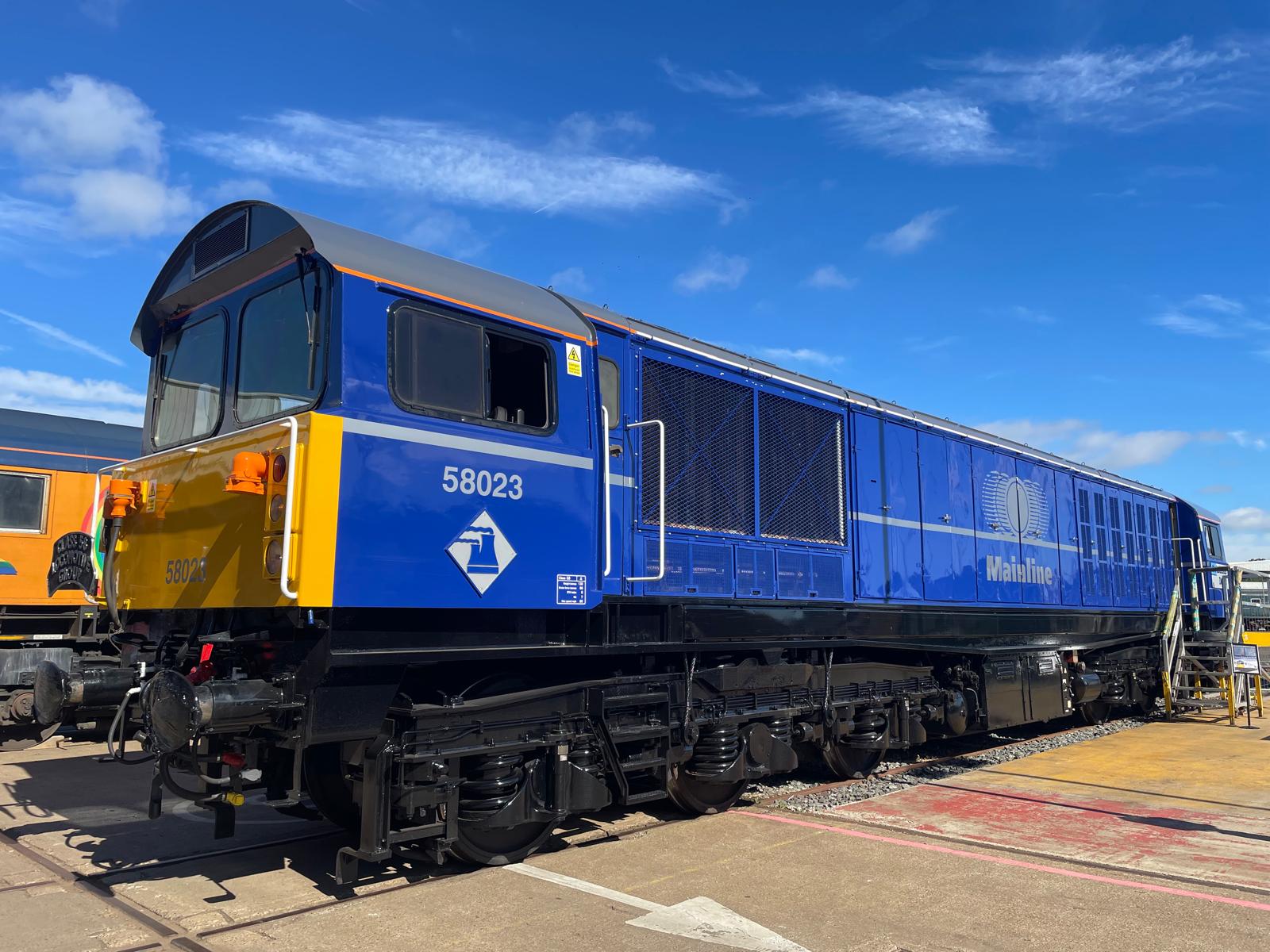
Mainline Blue & Silver

The full corporate scheme used an executive dark-grey roof, aircraft-blue body and cabs, a silver bodyside stripe and silver Mainline branding. Solebars were black, while blue front-end numbers appeared on the yellow warning panels.

Depot plaques and locomotive names were adapted to match the new blue-and-silver appearance.

Known examples: 58002, 58005, 58008, 58014, 58021, 58023, 58032, 58036, 58038, 58042, 58046 and 58050.

Notable variation: 58013 was painted blue before full Mainline branding was applied, leaving it in an unusual unbranded condition. Later component changes also created broken silver-stripe appearances on some locomotives.

Class 58 in EWS maroon livery

EWS

Two principal maroon-era variants

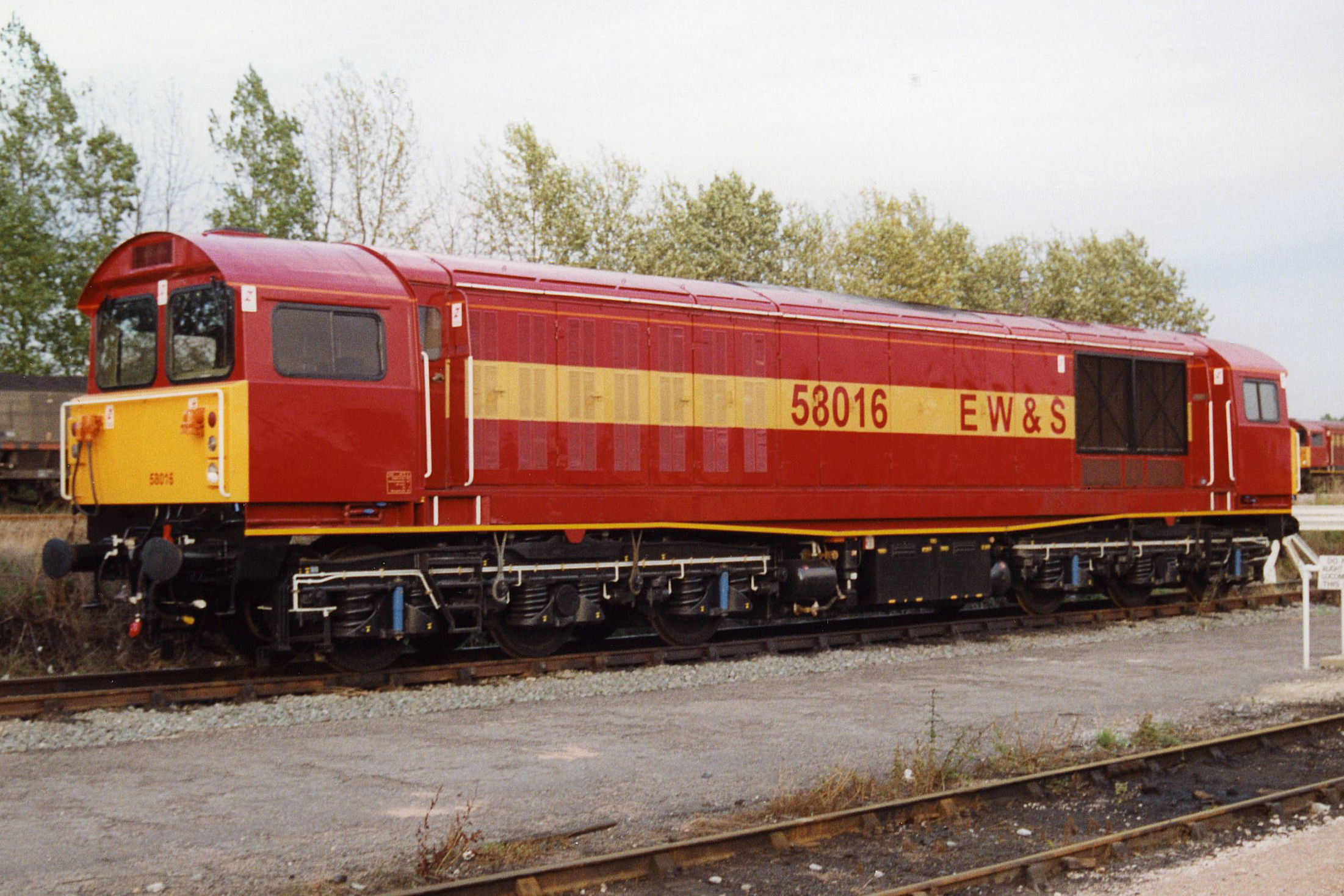
The EWS era brought the familiar maroon-and-gold corporate identity to a small part of the Class 58 fleet. Two main forms appeared: the original EW&S design and a later modified version using revised lettering and the Three Beasties logo.

EW&S Original Design

This version used an all-over maroon body with a thick gold band positioned centrally between the cabs. Large EW&S lettering and locomotive numbers appeared within the band.

Bufferbeams were black, a reflective yellow strip ran along the lower underframe and the large radiator grilles were painted black.

Known examples: 58016, 58024, 58048 and 58049.

Notable variations: 58033 carried the prototype arrangement with a higher gold band, while 58024 combined the later Three Beasties logo with the earlier lettering style.

EWS Modified Design

The later scheme introduced revised number and lettering styles and added the Three Beasties emblem of lion, dragon and stag.

Nameplates were normally positioned below the driver’s cab-side window, although individual locomotives displayed variations.

Known examples: 58030, 58037, 58039, 58047 and 58050.

Known variation: 58037 was recorded with mismatched bodyside doors that produced the distinctive “&WES” appearance.

Class 58 in ACTS livery

ACTS / Vos Logistics

Dutch export liveries

The original ACTS scheme used a dark-grey roof, blue body and cabs, and a yellow-orange band running the length of the locomotive and wrapping around the front.

Large ACTS logos appeared on the bodyside doors, the radiator grilles were black and the locomotives received visible front-end alterations, including additional headlights and revised tail-light arrangements.

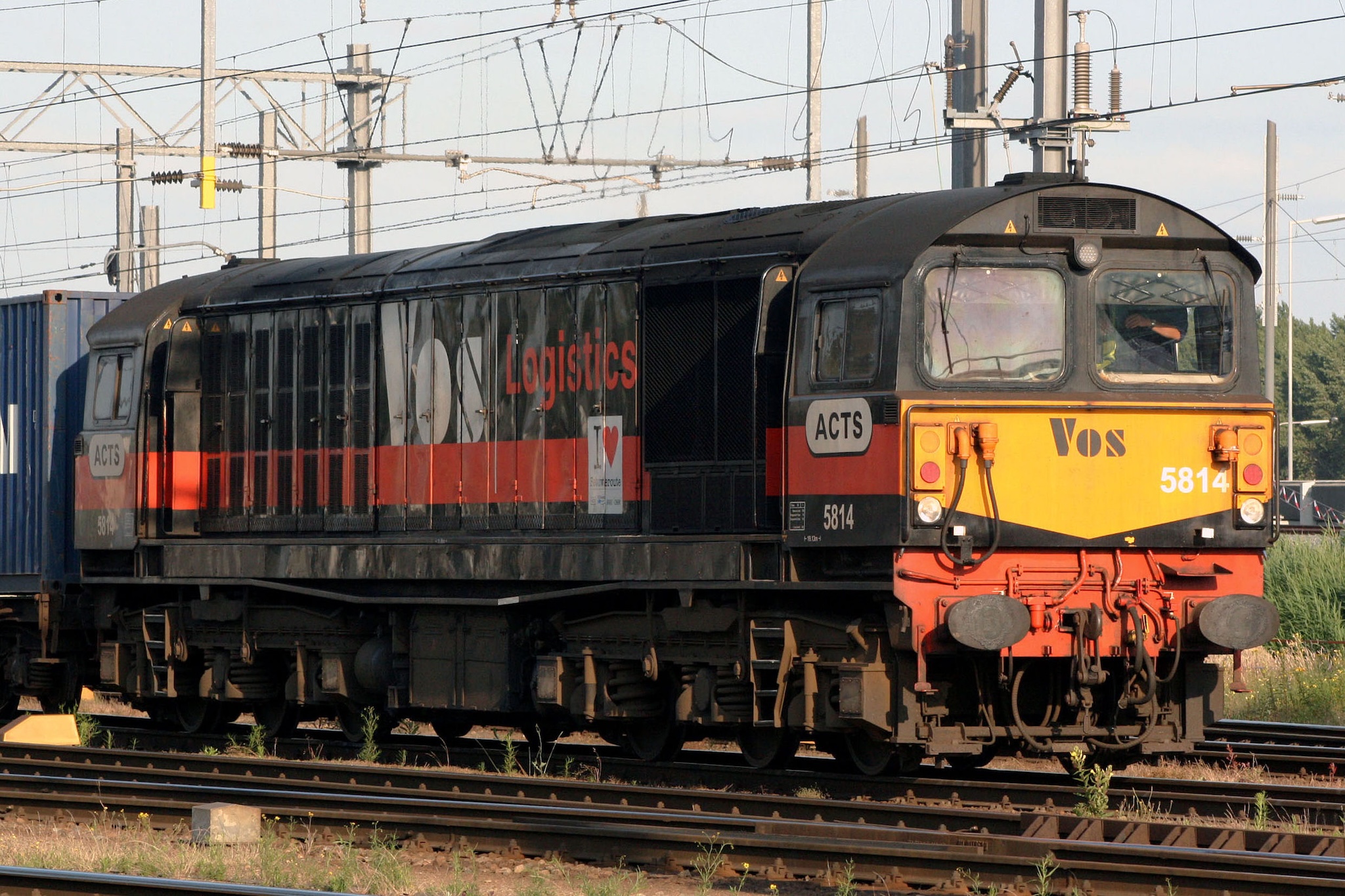
Later, 5814 introduced the dramatic Vos Logistics variation. This replaced the blue body with black, retained the yellow triangular front-end motif and used a deep orange-red bodyside stripe.

The large bodyside ACTS logos were replaced by smaller cab-side logos, while the identification numbers were repositioned and changed to white.

The black Vos Logistics version remains one of the most visually striking livery variations ever carried by a Class 58.

Class 58 export liveries in France

French Export Liveries

Seco Rail, Fertis, TSO, and ETF 

During export work in France, members of the Class 58 fleet gained three distinctive contractor liveries, each reflecting the company using the locomotives on infrastructure projects.

Seco Rail

The Seco Rail scheme combined black, orange and yellow. Locomotives had black roofs, orange bodies and cabs, a narrow yellow band and full yellow front ends.

Numbers were applied in black using a dash format such as 58-007.

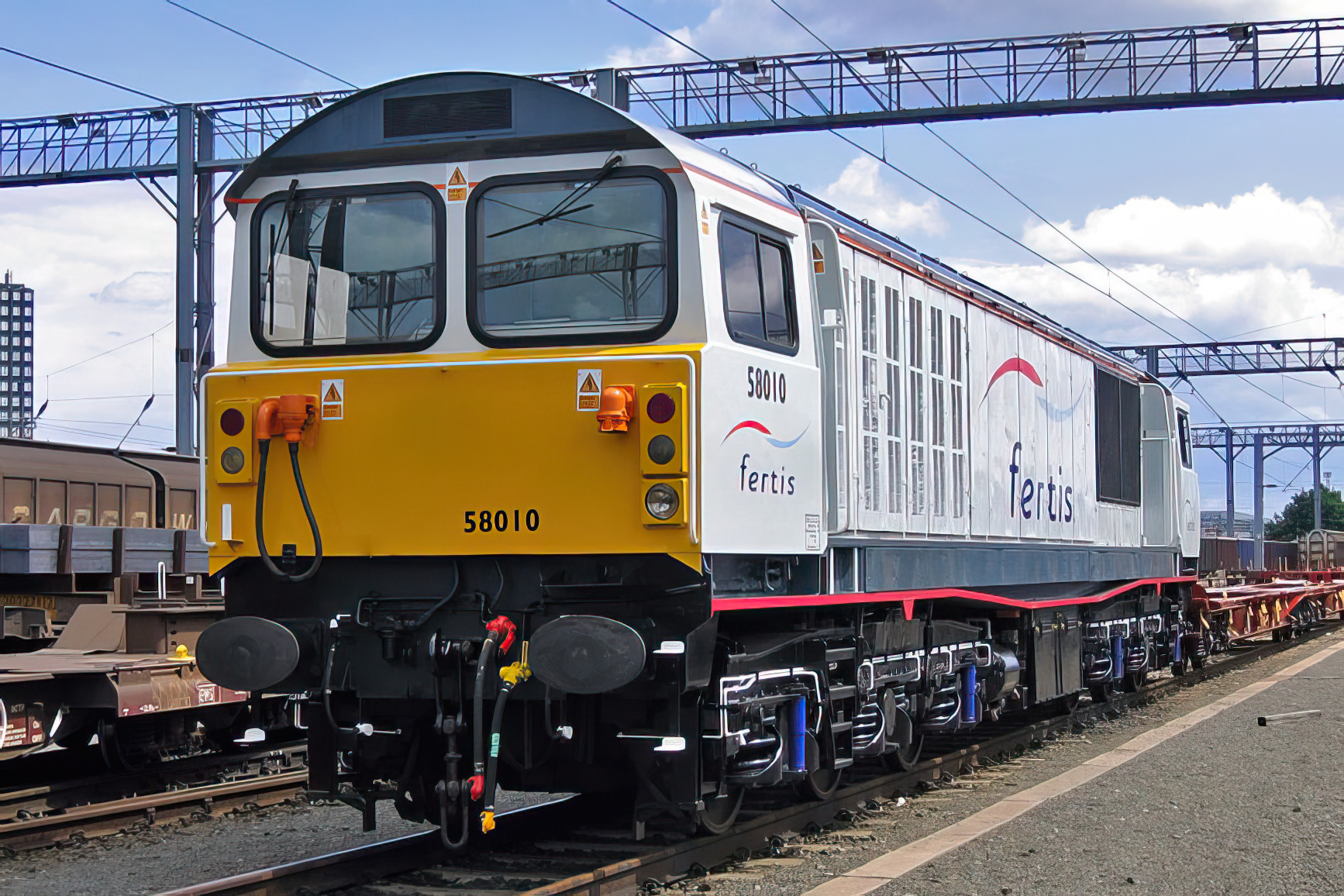
Fertis

Fertis locomotives used a mid-grey roof and underframe, very light-grey or almost white bodysides and cabs, black bogies and tanks, and purple numbering.

A large Fertis logo appeared across the bodyside doors, with smaller versions on the cab front and cab side.

TSO

The TSO scheme used a white roof, yellow body and full yellow ends, with light-blue underframes and bufferbeams.

Four locomotives carried the livery: 58033, 58047, 58049 and 58050.

Large TSO logos appeared on the cab fronts and cab sides, while locomotive numbers again used the dash format and were repositioned to accommodate the branding.

Class 58 in GIF livery in Spain

GIF / Continental Rail

Spanish infrastructure livery and its variations

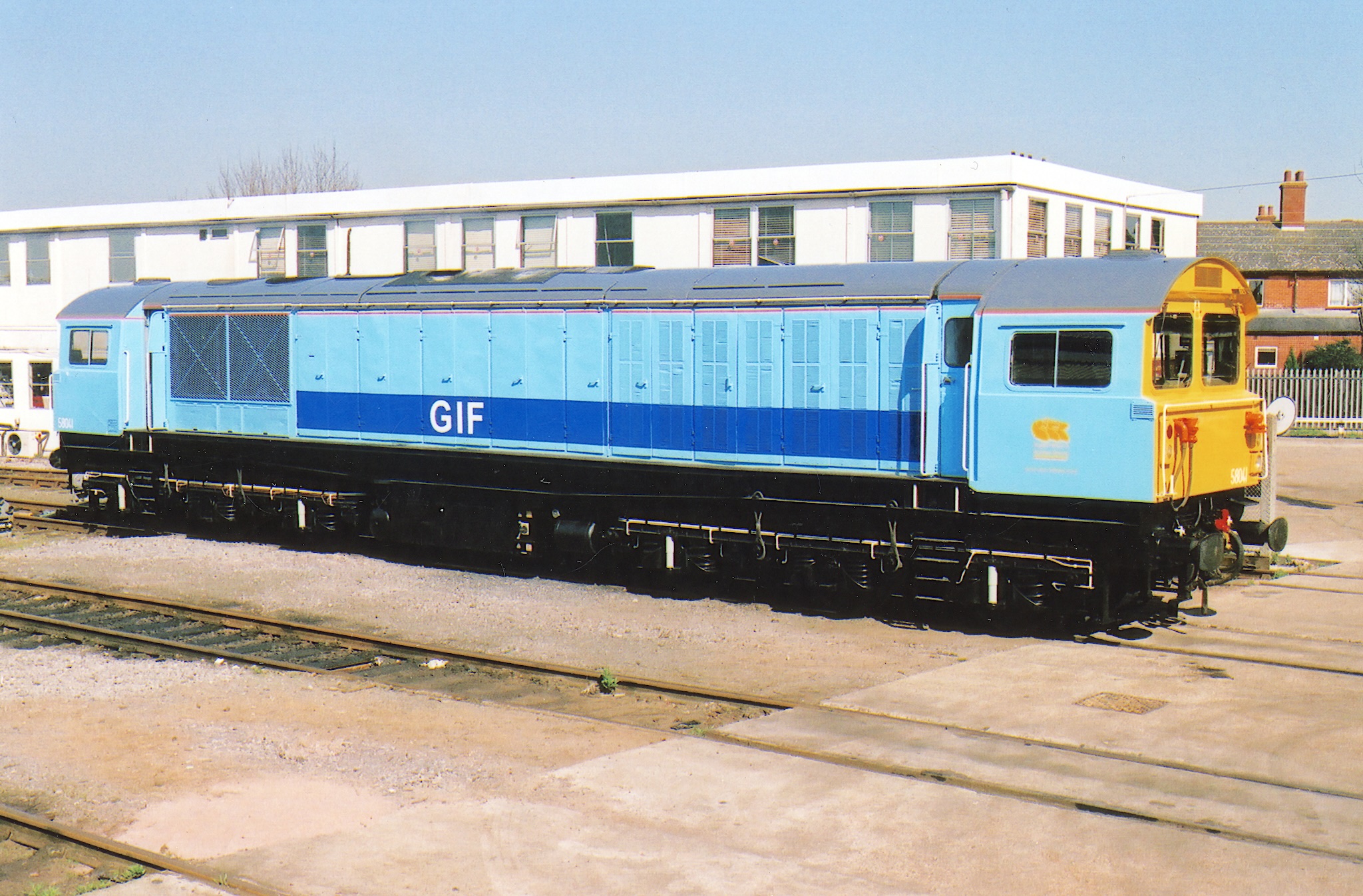
The Spanish GIF livery used a light-grey roof, sky or powder-blue bodysides and cabs, yellow cab ends, a dark-blue bodyside band with white GIF lettering, black underframes and the standard orange cantrail warning stripe.

EWS Three Beasties logos were retained on the secondman’s side, reflecting EWS ownership during the export period.

Across the eight Class 58s that carried the scheme, three principal variations were recorded. These mainly concerned window beading, radiator grille treatment and the size and placement of Continental Rail lettering.

58041 & 58043

The first pair sent to Spain in 2003 had smaller Continental Rail lettering and black front-window beading.

58043 later gained large L37 numbering, a spotlight and wing mirrors after arrival in Spain.

58025, 58029, 58030 & 58031

These Eastleigh-painted examples broadly matched the first pair, but used yellow front-window beading and larger Continental Rail lettering.

58031 left Britain without GIF lettering in the dark-blue bodyside band.

58020 & 58024

Painted at Old Oak Common, these differed most noticeably by carrying black radiator grilles and powder-blue front cab-window surrounds.

As a result, they did not present completely yellow cab ends in the same manner as the other GIF locomotives. Their front-window frame beading was also light blue.

Although commonly referred to as GIF liveries, the company was later incorporated into Continental Rail, which became the formal lessee of the locomotives.

A Changing Visual Identity

The range of liveries carried by the Class 58 reflects the major changes experienced by British rail freight from the early 1980s onwards.

From British Rail’s national Railfreight identity and sectorisation, through Mainline Freight and EWS ownership, to contractor operation in mainland Europe, each scheme represents a distinct part of the class’s working history.

Individual locomotive variations, component changes and transitional schemes also mean that the livery history of the Class 58 is more complex than the principal colour schemes alone might suggest.